
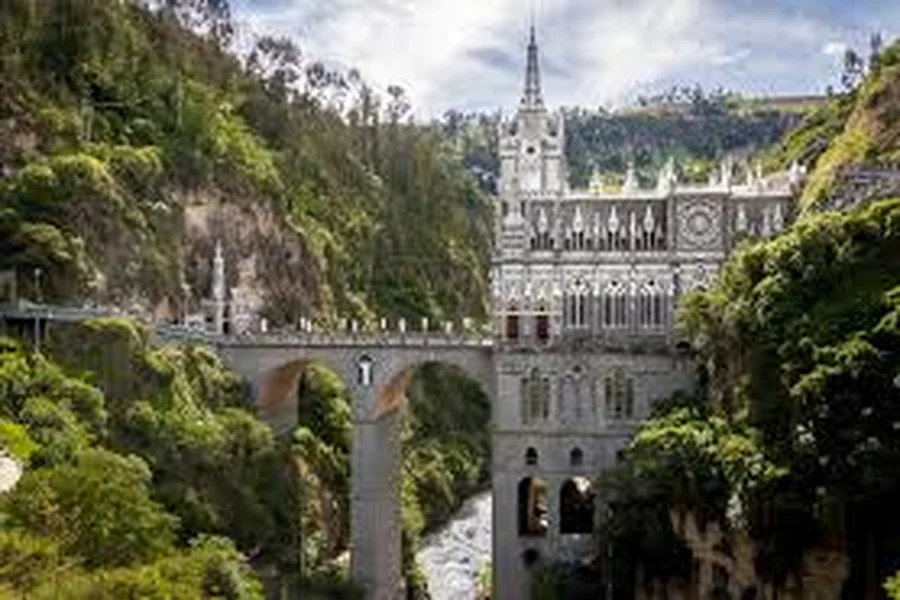
One of the world’s most incredible cultural heritage sites in South America is found in the Andes Mountains. These locations have a lot to say about the history of civilizations, colonial power and life. Each site is a different glimpse into human history, from mountain fortresses to desert geoglyphs. Stone art and architecture is a way of the past that is rich in the continent’s heritage. It’s like going back to the past to visit these. You’re able to feel walls constructed centuries ago. The ruins are visible that once held empires. This guide will get you acquainted with the best cultural heritage sites of South America. Prepare for a trip of adventure and discovery.
Machu Picchu – The Lost City of the Incas
Peru’s Machu Picchu is located in the Andes Mountains. This is the most popular cultural heritage site in South America. It was constructed around 1450 AD and was the royal estate of the Emperor of the Incas, Pachacuti. The stones are fit so tightly that you can’t fit a knife blade between them. There are water channels and temple terraces on the site. In 1911, Hiram Bingham discovered and made world famous Machu Picchu. However, it had long been known by the locals that it was located there. Nowadays, the site of Machu Picchu is a World Heritage property of the UNESCO. It has thousands of visitors daily. It is accessible by train from Cusco and also by the hike of the Inca Trail. Beautiful views of the mountains around. The most well known is the Intihuatana stone, a solar clock. The Temple of the Sun and the Room of the Three Windows are also highlights. The Spanish conquest of Peru did not lead to the destruction of Machu Picchu since it was concealed behind the clouds. It’s intended function is still somewhat of a mystery. Others believe it was a place of religious worship. Others believe it was a retreat for royalty. The ruins of Machu Picchu are a testament to the engineering and design prowess of its creators, regardless of their original purpose.
Easter Island’s Mysterious Statues
Easter Island is an island in the middle of the Pacific Ocean. It is part of Chile. The moai statues are a feature of the island that is renowned. These giant stone heads were carved by the Rapa Nui people. From 1200 to 1500 AD they created almost a thousand moai. The statues are of ancestors and leaders of importance. The moai all look towards the interior of the village. The biggest moai stands more than 30ft tall and weighs over eighty tonnes. These statues were moved and yet, without modern machines, it was amazing. The Rapa Nui had wooden sledges and ropes. They moved the moabi using logs to roll it. Deforestation and war have destroyed the island’s culture. But the moai remain as a powerful symbol. Easter Island has been designated a UNESCO World Heritage Site today. Most of the moabi were carved at the quarry at Reno Arrau. Unfinished statues are still attached to the rock, and can be seen. The largest platform, containing fifteen restored moabi is called Ahu Tong ariki. It’s truly a life-changing moment to watch the sunrise behind these giants. PETROGLYPHS and ceremonial sites are also found on the island. There are still Rapa Nui people living on the island. They do their best to maintain their traditions. The mystery of Easter Island entices many intrepid travelers. But the story of human resiliency and art is the treasure.
The Historic Center of Quito
Ecuador’s capital city is Quito. The historic center is one of the largest and most well preserved in the Americas. Quito was founded by the Spaniards on the ruins of an Inca city. The architecture has a European baroque style and indigenous touches. This style is known as Quito School. The historic center is a UNESCO World Heritage site. Walking is possible on narrow cobblestone streets. The buildings have white walls, green and blue balconies. The main square is Plaza de la Independencies. Includes the Presidential Palace and the Cathedral of Quito. The Church of San Francisco is a large collection of buildings and a beautiful interior. It’s altars are decorated with gold. The Church of La Compamia de Jesús is even more ornate. The golden chapel is a masterpiece of the Baroque movement in Latin America. There’s a secret in the monastery of San Agustina. The first cry for independence was made in the famous room which is preserved. There are towers from which you can climb up into the basilica and see the city. The city is located at an altitude of 2850 meters. You may be dizzy due to the altitude. However, the historic center has beauty and rich history to every breath. There are art crafts and food sold in the local markets. Quito’s old town is alive with history. This is NOT a Museum. A city that is alive; people who work, pray and celebrate.
The Nazca Lines of Peru
The Nazca Lines are giant geoglyphs in the Peruvian desert. They were created by the Nazca culture from 500BC to 500AD. Hundreds of shapes are created by the lines. There are animals like the monkey spider and hummingbird. Plants and geometric patterns. There are some lines that can be miles long across the desert. They can only be seen in full from the air. Daily flights over the Nazca Lines are conducted with small planes. How were the drawings so accurately made by the Nazca people? They cleared the upper dark layer of stone, exposing the underlying lighter layer. The dry and windless climate helped to preserve the lines over the last few centuries. The reason for the Nazca Lines is still unknown. Some scientists believe that these would have been used in religious ceremonies. Others think that they served as an astronomical calendar. One of the popular theories is that they were used for walking ceremonies. The Nazca Lines are a UNESCO World Heritage Site. They are easily broken and can be harmed. Tourists will be restricted to viewing platforms. There are more treasures in the surrounding desert. The ceremonial center of the Nazca’s was the Cauchi pyramids. Water is still transported through the aqueducts known as “piques”. It is an amazing sight to see the Nazca Lines from air. The shapes appear one by one as the plane banks. You sense a connection to some people who left a message in the sand. The Nazca Lines make us aware that art can be gigantic and fleeting. But thanks to the desert these images survived for two thousand years.
Cartagena’s Walled City
The city of Cartagena is located on the Caribbean coast of Colombia. It was established by the Spaniards in 1533. Because of its wealth in gold and silver pirates attacked Cartagena many times. So the Spanish constructed huge forts and walls. The walled city can still be seen today. It is a World Heritage Site. Walking in the old city is like walking down a colonial painting. The streets are small and multicolored. Bougainvillea (bougainvillaea) cascades from balconies. All blocks are lined by church plazas and mansions. The Cathedral of Cartagena is a simple yet impressive building. There is a beautiful courtyard at the Palace of the Inquisition. It has now become a museum dedicated to colonial history. San Felipe de Barajas is the most impressive of all the fortresses. The fort is located on a hill overlooking the city. There are tunnels under the fort for covert movements. Upstairs you can walk around and enjoy a 360 degree view of the Caribbean. The Gethsemane neighborhood was the home of working class people. It has become a vibrant area with street art and great food. All year round Cartagena is hot and humid. The time of day to walk walls is late afternoon. The sun is setting behind the sea, creating a beautiful orange and pink sky. Fresh coconut water and Fried Fish are sold by local vendors. Cartagena is a place where history merges pleasure. Music and dances never cease. This city in the wall is not a dead city. It is a celebration of life!
The Jesuit Missions of the Guaranis
Jesuit missions lie in the depths of the rainforest region of the countries of Argentina, Brazil and Paraguay. The following missions are of 17th and 18th century construction. The objective of the Jesuit priests was to convert the Guaraní people to Christianity. The missions grew to be more than churches, however. They were self-supporting communities comprising of schools, workshops and farms. The Guaraní acquired the art of music, and the trades. The Jesuits were responsible for safeguarding the Guaraní against slave traders. The most renowned mission is located in Argentina, San Ignacio Miní. Red walls of its stone walls are still standing tall. A magnificent façade featuring angels and flowers which is carved into the main church. Other significant site include Trinidad in Paraguay. The largest and best preserved mission. There are still traces of the large dome of the church. Not to be forgotten also is the mission of São Miguel das Missões, in Brazil. A few of these missions are listed as World Heritage properties. This architecture is a fusion and integration of Baroque and Guaraní elements. Crosses are found in front of sun symbols. The missions were abandoned on the king of Spain’s expulsion of the Jesuits in 1767. Over the years, a number of buildings were taken over by the rainforest. However, the bones of the stones do not perish. Strolling through a Jesuit mission is a subdued situation. Birds & wind are heard. You can envision kids playing the violin. You could observe the people’s farming and worship areas. It is an exceptional experiment in history that these missions were carried out. They couldn’t have been perfect. They did make a cultural connection between Europe and South America, however.
Final Thought
Cultural heritage sites are not just places to visit, they are a part of South America’s cultural heritage. They are books of man’s accomplishment. There are stories of triumph and tragedy at each of the sites. In haste, the Incas used no iron tools or wheels to construct Machu Picchu. The Rapa Nui used chisels for carving stones into their moai. The Spanish built beautiful cities on the remains of the old ones. In the jungle the Jesuits sought to create a better world. Here we learn how to be creative, to believe in faith and to survive. As you come to a cultural heritage site, you are joining a succession of witnesses. You’re standing where old priests used to stand. It is the same stone wall that you stepped on. The stars are the same. Yet these sites are subject to threats of climate change tourism, and neglect. It’s our responsibility to conserve them for the next generation. Provide support to local communities that care for these places. Travel responsibly. Inquire into the history prior to your visit. When you return home share with them what you have seen. The Cultural Heritage sites in South America are a present to the world as a whole. They remind us that man can do great things. They also remind us that you can’t expect anything to last forever, unless you take care of it. Now pack your bags or simply imagine while you’re sitting on your couch. No matter, be inspired by these ancient places. They’ve lived for hundreds of years only to tell you their story!
Frequently Asked Questions
What is the most famous cultural heritage site in South America?
Machu Picchu in Peru is the most famous. It is a UNESCO World Heritage site and one of the New Seven Wonders of the World.
How many UNESCO cultural heritage sites are in South America?
South America has over seventy UNESCO World Heritage sites. Many are cultural but some are natural. The exact number changes as new sites are added each year.
Can I visit Easter Island easily?
Easter Island is remote. You need to fly from Santiago Chile. The flight takes about five hours. Once on the island you can rent a car or bike to see the moabi.
Are the Nazca Lines visible from the ground?
Some lines are visible from a viewing tower. But the best view is from a small plane. Plane tours are safe and popular. They last about thirty minutes.
What is the best time to visit cultural heritage sites in South America?
The best time depends on the region. For Machu Picchu dry season is May to September. For Cartagena avoid the rainy months of September and October. Always check local weather.
Do I need a guide for these sites?
guide is not always required but highly recommended. Guides share stories and details you would miss alone. They also support the local economy.
Are these sites accessible for people with disabilities?
Accessibility varies. Machu Picchu has some accessible paths. Cartagena’s old town has cobblestones which can be hard for wheelchairs. Check each site’s official website before you go.
How can I help protect cultural heritage sites?
Do not touch or climb on ruins. Stay on marked paths. Do not take artifacts. Support local conservation groups. Travel with responsible tour operators.
What should I pack for visiting these sites?
Pack comfortable walking shoes sunscreen a hat and water. For high altitude sites like Quito bring warm clothes. For humid Cartagena bring light fabrics and insect repellent.
Is it safe to travel to South America for heritage tourism?
Most tourist areas are safe. But use common sense. Avoid walking alone at night in unfamiliar places. Keep valuables hidden. Ask locals for advice. Stick to well-known sites.
