
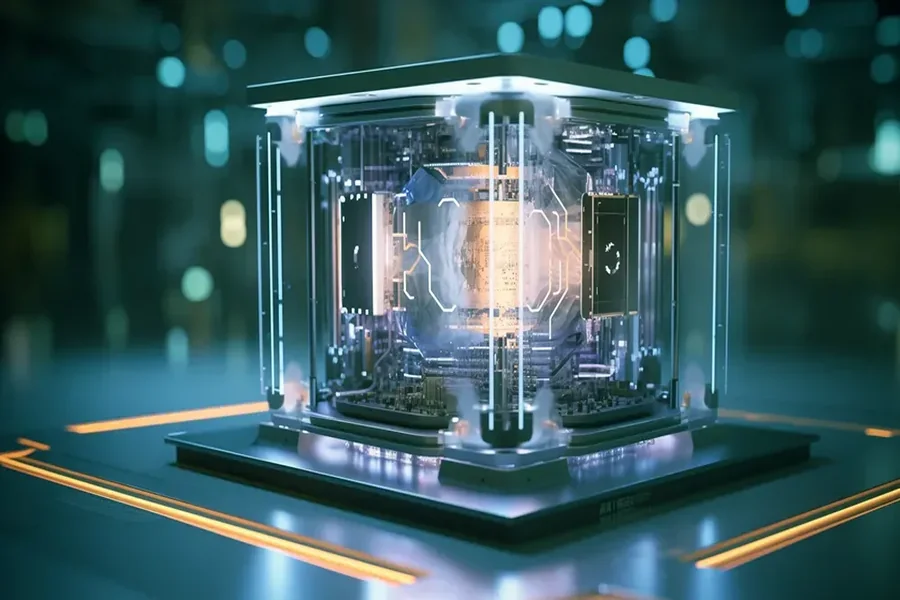
The world of computing is on the verge of being forever changed. Classical computers have been used for decades. These machines have bits which can be either a 0 or a 1. However, the next generation quantum computer will be composed by qubits. A qubit can be in a state of 0 and 1 simultaneously. The property is quite unusual and has its origin in quantum mechanics. It enables quantum computers to solve problems in a much quicker way than any classical computer. Now the race is on to create strong and stable quantum systems. In this article, we shall understand the working of these computers. It also discusses the difficulties and the bright future that lies ahead.
The Fundamental Shift from Classical to Quantum
Classical computers run their processing in a linear fashion. They listen to and follow step by step instructions. This will work fine for general activities such as browsing the internet or editing photos. However, there are some problems that are too difficult for classical computers. Consider simulating a new molecule of medicine. Or cracking contemporary encryption codes. These tasks are very demanding in terms of computing power. A classical computer will take thousands of years to complete. A quantum computer could be completed in minutes.
It is based on the principle of superposition. Superposition allows a qubit to be in more than one state simultaneously. 4 states can be represented by 2 qubits. 8 states can be stored in 3 qubits. The power of this increases with every additional qubit. The goal of the next generation quantum computers is to control hundreds or thousands of qubits. They too will employ entanglement. Qubits are linked by entanglement. The change of one qubit will affect another qubit instantly, regardless of distance. A tremendous parallel processing power is created by these two quantum tools. For certain types of problems, this speed is beyond that of classical computers. Then again, there’s a problem. The state of a qubit is very fragile. Their quantum state can be lost if they are exposed to heat or vibration. This is known as “decoherence. For a good quantum computer, protection of the qubits must be guaranteed from outside the computer itself. It’s not as easy as it sounds. More recent machines require temperatures near absolute zero. That’s colder than outer space. Power combined with stability is a must for next generation designs.
Major Hurdles in Next Generation Development
It’s not an easy task to construct a useful quantum computer. The first major obstacle is to error rates. The qubits are very prone to making errors. Random changes in the value of a single qubit may occur. The entanglement between two qubits could be lost. These mistakes can quickly add up. Scientists solve this problem by means of quantum error correction. On paper it’s a simple idea. Many physical qubits are needed to create a single logical qubit. If one physical qubit fails, the other physical qubits are still able to store the information safely. This, however, does require a lot of additional qubits. One estimate is that one thousand physical qubits are required to create a good logical qubit. This would require millions of physical qubits to make a useful machine. The machines available today have slightly more than 100 qubits.
The second challenge is of scale. The more qubits that are added, the more complicated the control system will be. The qubits require well-defined microwave pulses. It also requires to be wired and cooled. These would need to be thousands of control lines in a thousand qubit machine. The heat is transferred by each line to the cold. These errors are produced as a result of this heat. The engineers are developing new wiring techniques. They also are developing low-temperature, or ‘cryogenic’, chips. It is possible to control a lot of qubits with these chips without them overheating.
The third barrier to an application is software. The algorithms for quantum computers are different from those of classical computers. The majority of programmers have no idea on how to write quantum code. New programming language and compiler are needed. It is also necessary to find more effective means of assuring that a quantum program is correct. Windows (or MacOS) will never be used on next generation quantum computers. They will be powered by the specialized Quantum Operating System. Time and people with the right expertise are needed to develop this Software stack.
Promising Technologies for Stable Quantum Computers
There are a number of hardware platforms that are vying to be the basis of next generation quantum computers. They all have their pros and cons. The best-known platform is based on superconducting circuits. This technique is employed by firms such as Google, IBM and Rigetti. Superconducting qubits are quite large in size. They are fabricated on a silicon chip from either aluminum or niobium. They are controlled by microwave pulses. These qubits are quick with nanosecond operations. They require very cold weather, however. Their coherence time is short only about one hundred microseconds. That restricts the number of calculations they are able to complete before failing.
Another technology is based on trapped ions. It is also the approach that is taken by companies such as Ion and Honeywell. An atom with a charge is known as an ion. They are held above a chip by electric fields. Their quantum state can be controlled with lasers. The coherence times of trapped ions are typically very long (minutes or hours). They are also very high fidelity (less error). These run slower than superconducting qubits, however. Moving ions around takes microseconds not nanoseconds. There are also challenges in scaling trapped ions to thousands of qubits due to the large number of lasers and electrodes required.
A newer platform based on silicon spin qubits. These are similar to a single electron trapped in silicon. The Silicon used in classical computer chips is similar to what has been used in this case. That would allow spin qubits to be produced using current factories. They are much smaller than other types of qubits. One million spin qubits could be placed on one chip. They have good coherence time as well. The problem is that one has to make them all work together reliably. It’s led by Intel and researchers in Australia.
There are other possibilities, such as photonic qubits. These use particles of light. Light is fast, and interacts relatively little with its surroundings. Photonic qubits can work at room temperature. It’s a massive help! However, it’s difficult to make two photons interact. Typically, photons simply go through one another. Special crystals and mirrors are being developed to compel interactions. This platform has great potential for quantum communication networks.
Industries That Will Transform First
Your laptop will not be going anywhere in the near future thanks to next generation quantum computers. They will function as special purpose accelerators. You’ll request the hard problems to be sent to a quantum cloud service. The results will be returned in a quicker time than any classical machine can. There are several industries which will be the first beneficiaries.
Pharmaceuticals and drug discovery is a good choice. Classical computers are very challenging for simulating a single molecule. The bigger the molecule, the more electron interactions there are – this is exponential. These interactions are simulated in a natural way in quantum computers. They represent electrons using “qubits. This may be useful in developing new cancer or Alzheimer’s medications. It also could be used to create new, improved batteries and solar cells. You don’t have to test thousands of chemicals in a lab, you do them in minutes.
Finance is an early adopter, too. Banks would like to have the best investment portfolio. They also wish to do pricing on more complicated financial derivatives. There are numerous variables and constraints associated to these tasks. The quantum approximate optimization algorithm can find better solutions faster, as can other quantum algorithms. JPMorgan Chase and Goldman Sachs already have been testing quantum methods. They’re trying to get a slight advantage on opponents.
Logistics and supply chains will profit also. The problem of determining the optimal delivery routes for delivery trucks is a classic hard problem. With an increasing number of cities, the problem becomes increasingly difficult. These routing problems can be solved in a short time with quantum computers. They can also be used to enhance the loading of shipping containers, or airline schedules. Quantum experiments have been conducted by Daimler and Volkswagen in the areas of traffic flow and battery production.
The rest of the list includes climate science and materials research. This is a natural fit for simulation of new materials for carbon capture or efficient solar panels. Using quantum computers, chemical reactions could be modeled that break down pollutants. They could develop improved catalysts for the clean production of hydrogen fuel. These developments would contribute to combating climate change.
The Global Competition and Collaboration
Research and development of next generation quantum computers is an international endeavour. The USA are the leaders in private investment. Google, IBM and many startups are putting in a lot of effort. US government initiated the “National Quantum Initiative. This scheme is to endow research laboratories and to train workers. There’s significant investment in China as well. They have set up a large-scale quantum information science lab in Hefei. China is the leader in the field of quantum communication. They already have a satellite that is used for quantum encryption. There is a Quantum Flagship programme in Europe. Other countries such as Germany, the Netherlands and the UK are constructing their own quantum centers.
There is also a co-operation. Scientists present papers, and participate in conferences. Some quantum computers are available for free by companies such as IBM and put on the cloud. Small experiments can be conducted by any. Such openness facilitates the quickening of learning. However, there are secrets, too. Countries are concerned that quantum computers will be able to defeat encryption now in use. If quantum computers were large, they would be able to decipher bank transactions, or military communications. That is why countries’ security agencies are taking special interest in it. They are also investigating the quantum safe encryption. These new codes, in turn, should be able to withstand quantum attacks.
The race isn’t merely a matter of who makes the first big machine. It’s a competition about who creates the most helpful one! Having noisy qubits that are prone to error is not helpful. The number of qubits is not as important as reliability. Designed quantum computers of the future will likely be able to reach a milestone known as quantum advantage. That is, solving a real world problem more efficiently than a classical computer. Some say that this has already occurred, but this is challenged. Practical tasks that could benefit from some true quantum advantage are likely still a few years down the road.
Final Thought
The development of next generation quantum computers will not happen in one stroke. They’ll go through a gradual process of development. First, there will be improvements in error correction. Then more qubits. Then coherence times that are longer. As the upgrades are made, new applications will become available. Researchers and big businesses will be the first to use it. Cloud services will soon be available for later small businesses and individual users.
However, you can’t anticipate a quantum smartphone anytime soon! There are enormous cooling and control needs. For decades, quantum computers will be confined to special rooms. They’ll do what’s behind the scene. You may feel your life is changing, everyday. Medicines will be found in less time. Money systems will be more efficient. Savings in logistics will be achieved in terms of fuel savings. These enhancements will be like magic. However they will be based in true physics and engineering.
Also, there’s a warning. Today’s security would be undermined by the workings of a powerful quantum computer. We need to move to updated encryption prior to that. This needs to be a cooperative effort on a world-wide scale. But it takes time as well. The good news is that quantum safe encryption (QSE) has been developed already. This is just a matter of giving it widespread adoption. Quantum computers will be incredibly beneficial to the next generation of computers. But as with all great technologies, we need to make sure that we use it correctly. The future is “quantum. That future is not far off, however.
Frequently Asked Questions
When will next generation quantum computers be available for normal people?
You can already run small quantum programs for free on IBM Quantum Cloud. True useful machines with hundreds of logical qubits may arrive around 2030. But you will access them through the internet not as a personal device.
Will quantum computers make my laptop obsolete?
No. Quantum computers excel at specific hard problems like simulation and optimization. Your laptop is still best for email web browsing and gaming. The two types will work together.
How many qubits does a next generation quantum computer need?
For useful error corrected computation probably one million physical qubits. That is the estimate from experts. Today’s largest machines have about one hundred noisy qubits. We are still early in the journey.
Can quantum computers break Bitcoin?
A large enough quantum computer could break the elliptic curve cryptography that secures Bitcoin. Estimates suggest that would take a machine with millions of stable qubits. That is likely more than ten years away. The Bitcoin community can also upgrade to quantum safe signatures.
What is the biggest surprise in quantum computing development?
The hardest part turned out not to be making qubits but controlling errors. Many researchers underestimated error correction needs. Now it is the main focus of most labs worldwide.
How do I learn to program quantum computers?
Start with free online resources like IBM’s Qiskit tutorial or Microsoft’s Quantum Katas. You need basic linear algebra and some Python skills. No quantum physics degree required for simple programs.
