
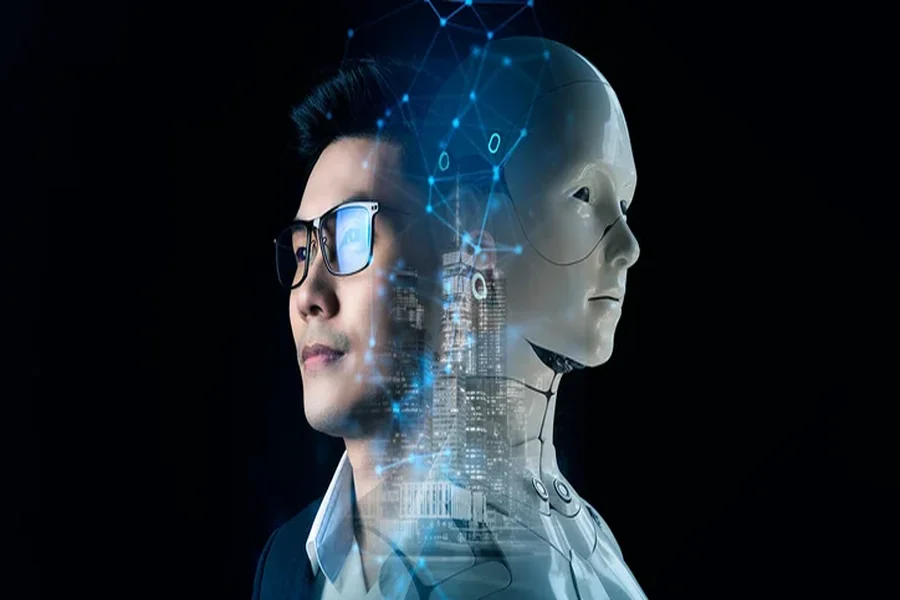
The development of generative AI is revolutionizing the way we write text, images and even code. AI models such as Catgut and Midjourney create amazing results in a couple of seconds. However, there are ethical issues involved with this power. These are the tools that people use daily, but do not consider the damage that may be done. Artists, writers, students and businesses are impacted by the ethical considerations of generative AI. But before the technology gets out of hand we must take time to understand these issues. This article dissects the various issues in layman’s terms. You will gain an understanding of the significance of bias, how privacy is compromised and who is accountable when AI gets it wrong. One major issue, let’s begin with.
Bias and Fairness in AI Generated Content
Generative AI is trained using human-made data. Human data is filled with outmoded biases and preconceived notions. If a biased text or images are given to an AI model to train, the AI model will show the same biases in its text or images. For instance, when using a generative AI to create a CEO, the AI might only display images of male CEOs. When asked to write about ‘nurses’, it may use female pronouns. Though seemingly small outputs, they perpetuate detrimental stereotypes. Firms could be inadvertently discriminating against certain groups if they are utilizing AI in hiring or marketing. It’s here that the ethical considerations of generative AI begin to emerge. Neutral tool accentuates actual inequality in the real world. Addressing bias is no easy task. It’s not as simple as instructing the AI to be just. Care must be taken to clean the training data. However, who is to determine what is fair? There are various cultures and each culture has its own perception of bias. What may be a solution in one country may be offensive in another. Often, developers are more inclined to release new versions of their model product without testing for bias. Then users share inorganic contents without being aware of it. It is a hidden bias that is damaging for those that are already marginalized. There’s a need for regulations to ensure that companies can’t release their AI without testing it for fairness. If there are no such rules, then generative AI will be responsible for dividing society even further.
Privacy Risks with Generative Models
Generative AI retains a lot of information from the data that it has been trained on. There are models that can recreate whole paragraphs of a book or your own letter from the web. Phone numbers, addresses and even faces have been extracted from popular AI systems. This is a huge breach of privacy! You may assume that your private photo is secure, since it has not been posted. However, if a friend posted a photo of a group, this may find its way into an AI training set. The model then gets used to your face. If people have access to this AI, they can create a copy of you in any situation. The ethical consequences of the generative artificial intelligence with regard to the privacy are frightening. Companies also input information of user conversations into their models. The AI assistant stores the words you say when you chat with it. The next person using the computer may receive replies to what you have said. Confidential data such as health or financial matters may seep out. Some AI companies now have an opt out feature but most people don’t think to request it. Companies say that they delete data, but models retain memory of what they learned. It’s not possible to easily remove a particular piece of information from a neural network. Damage Once Done, Damage is Still There. There is a scramble by lawmakers to “catch up” but privacy laws were drafted before the advent of generative AI. Greater levels of protection are required. The users should be able to request that their data not be used for training purposes. If that’s the case, generative AI is just another surveillance mechanism in disguise.
Accountability and Responsibility for AI Outputs
If an AI goes wrong, who is held responsible and arrested? This is a question which keeps lawyers awake at night. Suppose that a student is using a Generative AI to write an essay with hateful content. Student reports that the AI came up with the worst elements. Is the AI Company at fault? Or a doctor employs an AI diagnosis tool, which fails to detect any tumor. The patient suffers. Is it the softwares the doctor’s fault? Generative AI is sweeping the legal landscape and calling into question the very foundations of our legal system. The current laws have a human actor as the assumed ‘culprit’. But, generative AI doesn’t go out there with any intent or badness. It simply guesses at what the next word/pixel is likely to be. It is believed by some that the user who prompts the AI ought to be the one to ensure that the AI is completely responsible. Others say it’s the responsibility of the company which constructs the model to take responsibility for the results. Well, it’s not really clear. Examples of real cases are already becoming evident. A legal professional has fed information about a case into ChatGPT to have an AI compose a legal brief. Fake cases and fake citations were created by the AI. The work of a lawyer was not examined. The Lawyer was fined by the judge. However, was it lawyer’s negligence? Probably yes. However, what about a normal human that relies on the medical counsel from an AI, and is injured? There’s no way to verify all the facts on that person’s part. Companies use terms of service which state that use of AI comes at your own risk. That is not fair. There’s a need for a new framework of responsibility. Perhaps, the watermark should be used on AI creations. Perhaps businesses should be looking for cover for damages wrought by AI. Until someone is blamed, AI Generators will put us in a Blame Free Zone with no recourse for victims.
Deepak’s and the Spread of Misinformation
Generative AI creates realistic-looking videos and audio clips. These are known as “defaces. A bad actor can just grab a short snippet of the politician’s voice and create a recording to make the politician say anything. The outcome is a very convincing fake which can be spread in minutes throughout social media. The damage is caused by the time fact checkers react. The ethical ramifications of generative AI with regard to truth are enormous. One fake video can make all the difference at an election. When the fake CEO announcement is made, stock prices can plummet. The ordinary people can be destroyed by the fake pornographic video made without their consent. So many nations do not have any laws on defaces yet. Where laws are in place, it’s difficult to catch the creator, because all the tools are readily available. It’s difficult for social media to take action fast enough when it comes to taking down fakes. There are some platforms which benefit from anger and do not want to curb viral lies. Technologies are continually advancing. We soon won’t be able to take any video or audio recording as proof. This loss of faith damages all of us. Journalists will spend time substantiating patently obvious facts. New methods will have to be used to prove evidence to the courts. Families will engage in disputes about bogus recordings of family members saying unkind words. Technical solutions such as cryptographic signature for real content are needed. Then there’s a need of public education of defaces. However, education can’t keep pace with the generation. The creation of malicious defaces needs to be viewed by law enforcement as a serious crime and have real consequences. If it is not acted upon then truth becomes optional and there is no reality in society.
Intellectual Property and Copyright Issues
Generative AI is the bane of artists and writers. These models were trained without their permission or for any compensation on their work. It takes several years for a painter to have his/her style. Afterwards, an AI replicates that style flawlessly to produce thousands of comparable paintings. It is a no pay for the original artist. Here, the ethics of generative AI is related to stealing and “fair use”. The AI companies claim that training with publicly released data is not different from training humans with the same method by looking at art. However, when it comes to the production of 10 thousand copies in an hour, a human artist can’t do that. Copying done on industrial scale with AI. Lawsuits are pending and include a lawsuit at this moment. Some judges believe that it is fair use to train AI. Some consider it to be a violation of copyright. The result will have an impact on the creative industry. Musicians are concerned about the possibility of AI creating songs, which sound exactly like their own voices. With their pen names, AI books are swarming Amazon. AI copying of open source software is even a matter of legal disputes for code repositories. All the while, big tech companies make billions and creators are striving to make a living. Several businesses have begun to license data from creators. It’s a good thing. However, the majority of AI models have been trained on data that did not have licenses. If they have to delete/re-train, should they be forced? This would run into millions. There are suggestions to have a system whereby AI-generated content pays small amounts to the original creators. Some individuals hold the opinion that AI should not be trained on anything that is not in the public domain or has not been specifically given to AI for training. No solution is perfect however, doing nothing is not suitable. Rewarding creativity – not paying it to be automated away.
Frequently Asked Questions
What is the biggest ethical concern with generative AI?
Most experts say misinformation and defaces are the most urgent danger. A single convincing fake video can destroy lives or sway elections. Bias and privacy issues are also serious but they cause harm more slowly. Deepak’s can cause immediate irreversible damage.
Can generative AI be completely unbiased?
No. Perfect neutrality is impossible because every training data set comes from a biased human world. But developers can reduce bias by carefully curating training data testing outputs regularly and using techniques like reinforcement learning from human feedback. The goal is less bias not zero bias.
Who owns the content made by generative AI?
Laws vary by country. In the United States copyright law says only humans can hold copyright. So AI generated content without human creativity is not copyrightable. But if a human edits or arranges the AI output that edited version might qualify for copyright. This area is changing fast so check current laws.
Is it ethical to use generative AI for homework or work assignments?
It depends on transparency. Using AI to brainstorm ideas is usually fine. But submitting AI generated text as your own work is deception. Many schools and companies now require disclosure of AI assistance. The ethical choice is to tell your teacher or boss when and how you used the tool.
How can I protect my privacy from generative AI?
Do not share personal information with public AI chatbots. Assume everything you type is stored and used for training. Use local AI models that run on your own computer if privacy is critical. Also check if AI services offer data deletion options. Some do but you have to ask.
What should lawmakers do about generative AI?
They should require transparency labels on AI generated content. They should ban malicious deepfakes with criminal penalties. They should create a liability framework for AI caused harm. And they should protect data privacy by forcing companies to let users opt out of training. These steps would not kill innovation but they would prevent the worst abuses.
Final Thought
Generative AI is not going away. The technology improves every month. Fighting progress is pointless. But accepting every AI output without question is dangerous. The ethical implications of generative artificial intelligence demand that we act as responsible users not passive consumers. You have power every time you use these tools. Check facts before sharing AI content. Think about bias in the outputs you generate. Ask whether an AI image or text might harm someone. And demand better from companies that sell AI products. They listen when customers care. The future of generative AI will be shaped by the choices we make today. Choose awareness over ignorance. Choose fairness over speed. Choose truth over convenience. That is the only way to build a world where humans and AI coexist without losing our humanity.
