
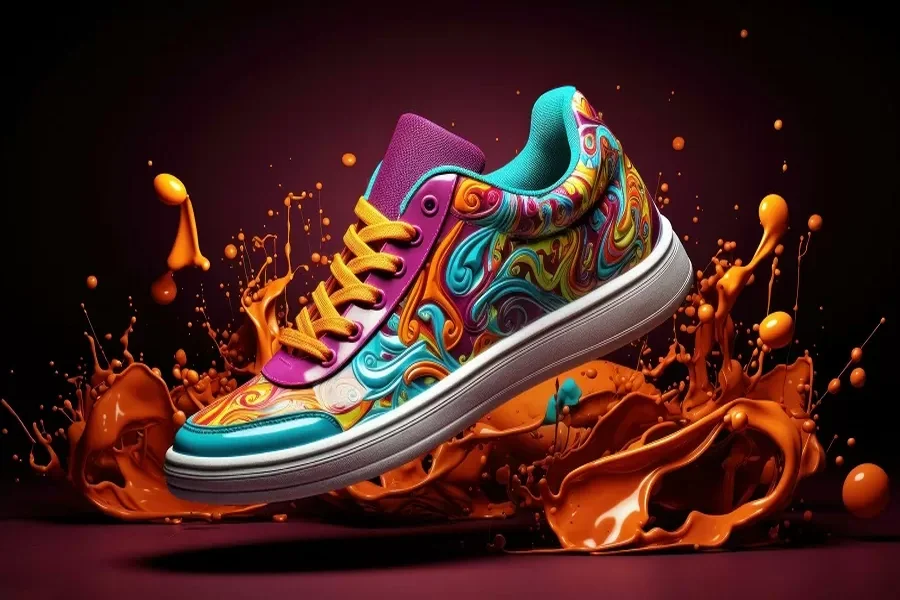
Shoe shopping and shoe wearing is set to become a new normal. Upon initial inspection, it seems like 3D printing is limited to the creation of plastic prototypes and gadgets. However, the possibilities for 3D printed shoes’ design are far greater than that. Even big footwear companies and small start-ups are creating real shoes that are generated to be worn every day. These shoes have been engineered to fit your feet like a glove. They have a lower waste utilization rate. And they look terrific! This article will help you through all the details. You’ll become familiar with new materials, smart manufacturing methods and even learn how your next pair of sneakers could be “printed” from your local store. Together let’s take the next step in the future.
The Shift from Mass Production to Personal Fit
For decades the shoe companies produced shoes in standard sizes. You were either a size 8 9 or 10. Your left foot however, may not be exactly like your right foot. One foot could be wider or have a higher arch. Mass production could not explain for these small differences. This is where the possibilities of 3D printed footwear design are promising. When using 3D printing each shoe will be made for one person only. Your feet are scanned in 3D in just one moment, resulting in the exact shape of your feet being captured. Next, a computer program makes fine adjustments to the shoe configuration that takes into account your arches – the width of your toes and the curve of your heel. The printer is printing the shoe layer by layer for you! No more after-hours-of-walking shoe size predictions. Stiff leather is no more, no more. Fitting Shoes straight from the get-go. A personal fit can also keep athletes from getting injured. For those individuals with unique foot types, support will be offered where it is needed. Diabetics or arthritics, who have foot discomfort, may get custom cushioning. The traditional approach to manufacturing shoes for all people is disappearing. The new procedure is to create shoes, one at a time.
New Materials Driving the Future of 3D Printed Footwear Design
3D printing has gone past plastic to other materials. The materials that scientists have created for shoes, are amazing. Flextiles: Filaments that are soft and rubbery. They are flexible yet will not bend down with the foot. Other materials provide cushioning, which is similar to that of foam. A few companies use powders which become solid, light soles. That’s even recycled materials that are in the mix. Shoes that are too worn, plastic bottles and fishing nets can be ground up in order to be used as the material in the printing of new shoes. Bio-Based Materials is also on the list of the future 3D printed footwear design. Plants, such as corn, or algae source. They are broken down in shoe’s end-of-life. So you’d like to try on some seaweed for shoes? Not a dream, that is. It’s not something that will happen in the future. Another interesting material is the liquid resin which solidifies when light is directed on it. This establishes very finely detailed patterns. Solutions can be created by the designers by using the honeycomb structures, which have excellent shock absorption. The openings in uppers may be in the form of a mesh to allow air to pass through. This material library is continually being updated, becoming larger with the addition of yearly materials. As new materials are introduced, there are new comfort durability or style possibilities. You will soon be deciding on what material your shoes will be out of like you will for your coffee roast. Light or medium / heavy duty.
Sustainability Gains Through On-Demand Manufacturing
There’s a ton of waste produced in the shoe industry. Previously the process of shoemaking consisted of cutting fabric and leather from large sheets. The remaining parts are disposed of directly in landfill. Water is contaminated by glues and dyes. Most shoes will be thrown away after two years. These are all issues that the 3D printed footwear design of the future can overcome. For the first time, 3D printing is solely using the material required for the shoe. No cutting waste. No leftover scraps. Several 3D printers exist which can utilize recycled plastic as raw material. This avoids waste being sent to landfill or sea. 3rd production is production according to demand. A shoe company doesn’t print 10k shoes and have them in a warehouse. One pair is printed at the time of ordering. This takes away the danger of dumping or burning unsold stock. It also cuts down on shipping weight as well since you can have shoes made locally. In some stores there will be printers in the back. Walk in and go in for scanning and they’ll make a pair of shoes for you there and you walk away with them the next day. No overseas shipments. No air cartons. This change to local on-demand manufacturing drastically reduces carbon emissions. Printing is a natural means to make sustainability. One has to not sacrifice comfort as concerns the planet. You get both.
Performance Breakthroughs for Athletes
It’s what happens with the pro athletes every day. They must be equipped with an adequate set of equipment. The future of 3D printed footwear design is an advantage for them, as compared to the traditional factory designs of 3D printed footwear. Sprinters should have a stiff bottom at the start and a flexible bottom during the stride. There is a need for assistance in all sudden side changes of pace for a basketball player. A hiker requires a shoe that is able to adhere to the wet rocks and protects sharp rocks. The 3D printing approach can be used to make one shoe with various zones. Heel area may be stiff & rigid. The toe area may be a soft pattern which is flexible. The midsole can be designed to have varying densities – e.g. hard outer ring and soft midsole. They are shaped in a complicated internal manner, which cannot be accomplished with traditional molds. However, a 3-D printer can. Foot simulators are used to model the foot’s motion by the designers using software. Next, they fine-tune all the millimeter of the shoe for optimum performance. The spikes are already being worn by leading runners and hikers and the 3D printed version has been developed. They have enhanced Energy Return and decreased fatigue. Shoes are fitted with personalized cleats for sports players. The very same 3D printed shoes, which keep the heels locked for optimum power transfer, are set to be worn by Olympic cyclists. It’s also becoming more affordable, so that the amateur athletes can also enjoy the technology. This weekend, the 5K run is coming to you, so you may have a shoe specifically designed for your running style soon. It’s not just the pros that can perform! It becomes standard.
The Role of AI and Scanning Technology
The 3D printer is just one component of the system. The magic really happens prior to printing. AI creates your perfect pair of shoes, using foot scanning. Now, your feet can be scanned with a simple smartphone App. The camera takes footage of your foot shape and motion as you take a stroll around your living room. AI examines the movement of your ankle, the flattening of your arch and the distribution of pressure. It then creates a new shoe model in just seconds. The data is utilized for 3D printed footwear design, using it for making smart decisions in the future. AI understands the types of cushioning patterns that will suit flat feet. Knows what heels are best to wear to avoid blisters. Knows thousands of past designs and enhances them to create better designs. Shoe engineering knowledge is NOT required. All you do is wave your hand over a scanner or stand on a scanner. All the rest is handled by the technology. The more advanced models even predict the distance running shoe’s wear after 500 miles of the running back’s hard work. They adapt it to be more durable in high wear areas. AI and scanning puts together quick and inexpensive custom shoes. Formerly it would take a group of experts weeks, now it takes minutes. The more the AI learns from each foot and the better it gets and it does get better! Next shoe: wiser than the existing phone.
Final Thought: A Footwear Revolution Unfolding
3D printed shoes’ design future isn’t far off. It is coming now to the little workshops, and the large factories. Soon choices will be available that weren’t there 5 years ago. Looking for a shoe which has been produced from the ocean plastic that only fits on your feet? Done. Looking for a shoe that will conform to the swelling that occurs in the morning and goes back to normal by afternoon? Coming soon. Looking to switch up your shoe’s colour every week by adding on new layers? Already possible. This revolution alters comfort, much more. It alters the way of thinking in regards to possessing items. You won’t be purchasing a shoe that is just about the right size, you’ll be purchasing a shoe that is just right. That pair will endure for a longer time since it is in line with your physique. Once it becomes worn out you can make the next pair using the recycled material. The waste stream shrinks (decreases in size). The more you wear it, the happier you will be! Those brands that don’t take note of this change will vanish. Agile makers will be the smaller ones that will flourish. As a customer you have power! Foot shape + style + activity level = starting point to design. That’s the promise of this technology – to bring an offline experience without compromising on performance. Faster or cheaper – no, but more human. Take a step forward to that future. There’s a model that will fit you perfectly.
Frequently Asked Questions
How much will custom 3D printed shoes cost?
Prices are dropping fast. Today a custom pair may cost 200 to 500 dollars. In five years expect 100 to 200 dollars. That is comparable to quality off-the-shelf shoes. Mass production is cheap but so is printing when done locally. Your custom fit adds value without a huge price jump.
How long does it take to print a pair of shoes?
A simple pair takes two to four hours per shoe. Complex designs with many layers could take eight hours. Printing both shoes overnight is common. You order in the evening and pick them up next morning. Some fast printers now finish a sole in under an hour.
Are 3D printed shoes durable?
Yes for most everyday use. Modern printing materials match or beat traditional rubber and foam. A printed sole lasts 500 to 1000 miles of walking. That is similar to a quality running shoe. High-wear areas can be reinforced during printing. The bond between layers is strong because there is no glue. The shoe is one solid piece.
Can I wash or clean 3D printed shoes?
Yes. Most printed shoes handle gentle soap and water. Avoid hot washing machines because heat can soften some materials. Use a damp cloth for the upper and a soft brush for the sole. Some new materials are fully waterproof so you can rinse mud off easily.
What if my foot shape changes over time?
That is a feature not a problem. Your foot scan is stored digitally. If you gain weight or start a new sport your foot may change. Just get a new scan. The AI updates your shoe design in minutes. Print a fresh pair. You never have to settle for an old fit.
Will 3D printed shoes replace all normal shoes?
Not completely. Simple flip-flops or cheap rain boots will still be made by traditional methods. But for any shoe where fit matters like work boots dress shoes or athletic trainers 3D printing will take over. The comfort difference is too big to ignore. Once you try a custom printed shoe you will not go back to standard sizes.
What materials are safe for skin contact?
Most printing materials are body-safe. Many are the same plastics used in medical devices or food containers. Some companies add natural cork or cotton fibers for a soft feel. Always check the material data sheet if you have sensitive skin. Allergies are rare but possible. The industry is moving toward hypoallergenic options as standard.
Can I design my own shoe style?
Absolutely. Many brands let you choose colors patterns and even textures. You pick a base model then adjust options on a screen. Advanced users can upload their own 3D models. The printer follows your design exactly. Your imagination is the only limit. Just keep physics in mind. A wild shape still needs to support your weight. The AI will warn you if your design fails practical tests.
