
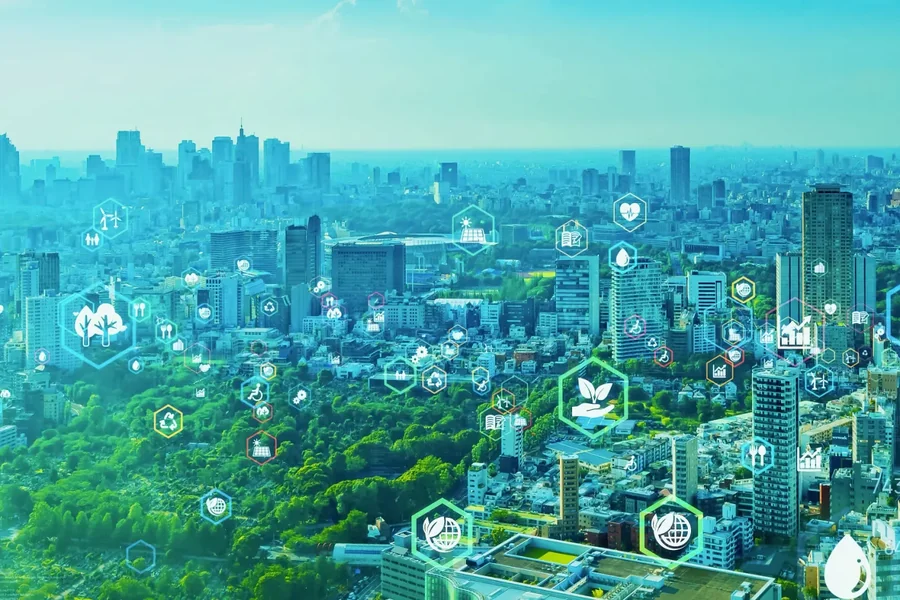
The smartness of cities is increasing day by day. It is used in traffic lights which change depending on the number of cars. Its felt in energy efficient buildings. It’s simply an idea that has been changed. Smart cities IoT relates the every day objects to the internet. Then these objects communicate with each other and come to some decisions. Smart cities are evolving and improving on a day-to-day basis. It is used in traffic lights which change depending on the number of cars. Its felt in energy efficient buildings. It’s a simple idea that’s brought about the change. Smart cities IoT relates the every day objects to the internet. Then these objects communicate with each other and come to some decisions. In this article, we will go over how this technology works. It also provides an explanation as to why this technology is important to you and explains how it works. It also makes you see why it’s important to you.
Understanding the Internet of Things for Smart Cities
Smart cities’ Internet of Things is a network of physical devices. Sensors, cameras and meters are a part of these devices. They obtain information from their surroundings. After which they transmit that info to a main system. The data is analyzed and actions are taken in the system. A smart trash bin can for instance, convey the information to know when it is full. It is a communication tool to the waste management team. Full bins are emptied, and the team is then emptying any other full bins. This will help to conserve time, fuel and labor. Entire operation is carried out automatically. It’s the magic of the connected devices.
Consider a city to be like a living body. As with the nervous system, the IoT is essential for delivering the information necessary for effective operations. Sensors are equivalent to the nerves. They sense what’s going on on the street, in the building and in the air. The central software is the brains. It takes into account all the information. It then uses commands to send to actuators that are similar to muscles. These actuators control the opening of traffic lights, valves or activate fans. All the parts are in harmony with each other. Most of these are actions that you are not aware of. However, your life is made easier and safer everyday.
How Smart Sensors Change City Life
The Internet of Things (IoT) for smart cities revolves around smart sensors. These mini devices are installed on the lamp posts, connecting water pipes, buses with each other. They record temperature, humidity, noise and vibration and air quality. A noise sensor can be used to alert to the presence of noisy vehicles near a hospital. This notifies police to be aware of the area. A vibration sensor, on a bridge for example, can detect cracks before they expand. It is early in the city that the bridge is repaired. This means there are fewer accidents, and cost savings.
Smart sensors make parking hassle-free. A sensor is located in each parking space which will determine whether there are any vehicles present. There’s an app that lets you know where there are available spaces. Follow straight to a vacated space. Say goodbye to 20 minutes of block circles. This will help to decrease the traffic and pollution. Street lights also become “smart. A light is only illuminated by a person when they are walking by, as the light is controlled by a motion sensor. The majority of the time the light is dim. Cities achieve 50% or greater reduction in energy costs. With the Internet of Things for smart cities, each corner is an efficient area.
Real World Benefits of Connected Cities
Smart cities and the Internet of Things (IoT) have a positive impact on all aspects of urban life. One huge traffic beneficiary is… Smart traffic lights are able to communicate with each other. Their colour varies in response to the real time flow of cars. A convoy of vehicles is driving through a series of traffic lights. This will help with reducing stop and go driving. The reduction of idling results in less fuel burned, and better air quality. There are some cities which have reduced the travel times by a quarter.
There is an improvement in waste management. Smart bins are bins that crush trash that is put in them. They can store 5 times more waste as compared to normal bins. They say something when they’re full! Please note that trucks will not be sent unless necessary. This is a 70% reduction in garbage truck trips. This translates to reduced emissions of diesel smoke, reduced noise and reduced costs. Water systems become “smart” as well. Pipes are equipped with leak detectors to alert of any leaks as soon as they occur. As soon as the city is notified of the issue, it dispatches a repair team. Say goodbye to thousands of gallons going down the drain, wasted! Smart cities, using the IoT, save resources and money each and every day.
There is a significant increase in the area of public safety. Street corner gunshot detectors can detect gunshots in real time. They tell the exact location to Police within seconds. The police are far more prompt in reaching the scene. Victims are assisted in a timely manner. Witnesses stay safer. Smart cameras are also employed in some cities. These cameras aren’t just video recorders. They analyze behavior. They can identify a pedestrian in a fall on the sidewalk. An ambulance is sent out before a phone call to 911 is made. Older adults are more secure with the knowledge that they can be accessed by assistance.
Challenges We Must Solve First
Smart cities and the Internet of Things are not without its challenges. The price is a major concern. It is costly to purchase millions of sensors. It would take years to install them on all the streets and all buildings. It is difficult for small cities to get started, especially if they have limited budgets. They require funding from grants or through private business relationships. The other problem is to maintain all the devices functioning. Sensors break, batteries go bad and wires get broken. There are thousands of little things that need to be remedied in a city every week, and a team is needed. The team must be trained and ready – that team.
Another obstacle to this is power supply. There are many sensors that are battery operated. Reaching into hard to get at areas for changing batteries is difficult. Some sensors are solar, but they don’t function when it is cloudy. Others take the power lines from street lighting. It does work, but is somewhat complicated. There’s still a need for an improved solution. Different brands of devices often can’t communicate with each other, too. An open standard is needed for cities; a traffic sensor from Company A might not work with a software system from Company B. All devices can share data freely with these standards.
The Role of Data Privacy and Security
Internet of Things (IoT) for smart cities has privacy data as a big issue. A variety of information is gathered by sensors. Some of that information is personal in nature. People are walking on a street and a camera is observing them. A parking sensor is used to know the parking information. A smart meter is a meter that measures when you use water and/or electricity. This information could be misused and a person could be tracked or harassed. It is extremely sensitive information that needs to be safeguarded by cities with utmost care.
The first step is to have an encryption that is strong enough. All the data from a sensor to the central system should be scrambled. The only way it can be unscrambled is by the city’s computer. Access controls are next, and then you provide settings for the backup. Some city workers are able to view some of the information. Records for water meter should not be maintained by a traffic engineer. Access to data is regularly audited to determine who accessed data, and for what purpose. Anonymization helps too. The system can anonymize names and license plates prior to saving of data. This way, no one can connect the information to an individual.
The security from hackers is equally crucial. Traffic light colors could be altered by a hacker, leading to crashes. Open water ways to flood streets. Cities need to assess vulnerabilities in their systems. Back-up plans are needed if there is an attack. New threats are addressed by regular software updates. There are cities that employ ethical hackers to attempt cracking into the system of the city. This is the case because these hackers look for weaknesses first before the real criminals do. Smart Cities with the IoT can be safe. But, it requires constant effort and care.
Frequently Asked Questions
What is the Internet of Things for smart cities in simple words?
It is a system where everyday city objects like street lights trash bins and water pipes connect to the internet. They share information and work automatically. This makes the city run smoother with less waste and lower costs.
Does this technology cost a lot of money?
Starting costs are high. Sensors and installation require big upfront spending. But over time cities save money on energy fuel repairs and labor. Many projects pay for themselves in three to five years. Grants and public private partnerships help too.
Can hackers shut down a smart city?
Hackers are a real risk. But cities can protect themselves with strong security measures. These include encryption access controls and constant monitoring. No system is 100 percent safe. But good design makes attacks very hard to succeed.
Will smart cameras watch me all the time?
Smart cameras do capture video in public spaces. But most cities use them only for safety reasons like detecting falls or gunshots. Privacy laws often limit how long data is kept and who can see it. Anonymization helps protect your identity.
How do residents benefit directly from this technology?
You get shorter commutes easier parking lower utility bills cleaner air and faster emergency response. Your daily frustrations like traffic jams or full trash bins happen less often. Life feels smoother and less stressful.
Do I need to buy any special device to use smart city features?
No. Most smart city features work in the background. You may use a free parking app or a traffic website. But the sensors and systems do their jobs without you doing anything extra. Your phone connects to the city’s information through normal apps.
Final Thought
The IoT for smart cities is no pipe dream. It has already taken place in various hundreds of cities across the globe. Barcelona’s huge saving was on water. Singapore turned the intersection into a traffic flow like a river. Copenhagen is reducing emissions of carbon with the help of sensors. Here are some examples which show that the idea is viable. With technology, there is only so much that can be done. In addition to being a smart city, a city needs to be a kind city. Data must be used for the service of people – not the other way around. There is no trade-off that should take priority between efficiency and privacy. Progress is best achieved in a system in which the human needs are respected. With the increasing number of sensors and devices, there is a question that we have to ask. Does this lead to an improvement of the situation for all, including the poor, the old and the vulnerable? When it is a ‘yes’ it means that we are creating a truly smart city. Otherwise we’ve got to change our direction. How we choose to live in the city now is the future of urban living. Choose wisely.
